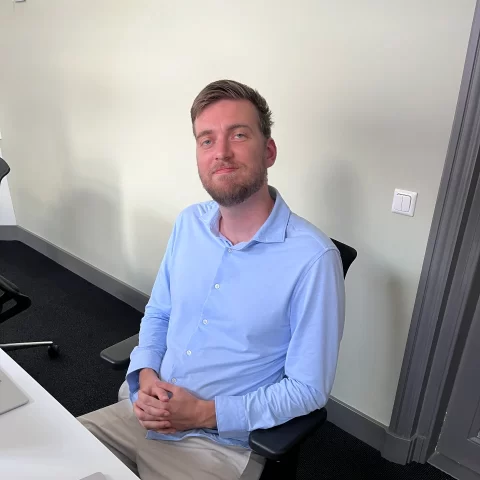
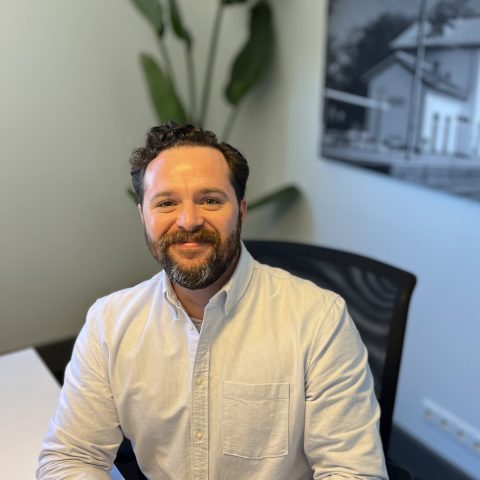
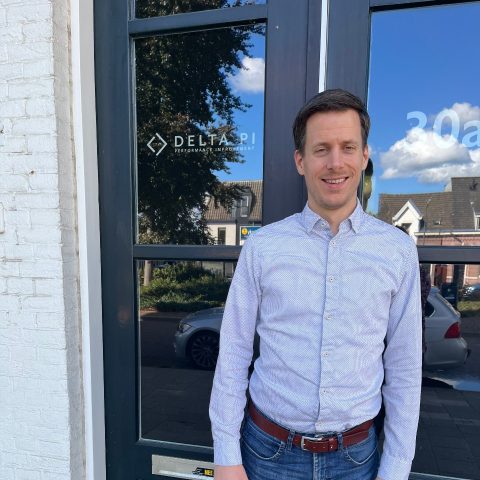
The Dutch infrastructure appears sound, but beneath the surface, a worrying problem is growing: deferred maintenance. Many bridges, locks, roads, and tunnels are approaching the end of their lifespan, while the capacity to address everything in time is lacking. Consultants Ronny van den Heuvel, Michiel Oussoren, and Melchert Rijks work daily on issues arising from this maintenance backlog. They think in terms of functions, make the task concrete, and help establish clear priorities.

In the middle of the last century, civil engineering structures were built at a rapid pace. Now, they are collectively in danger. What is the current state of Dutch infrastructure?
Melchert: “We really should be worried. Aging is setting in. Bridges, locks, dams: much was built in the fifties and sixties. Add eighty years of lifespan to that, and you know that maintenance is needed now.”
Ronny: “You already hear it in the news: malfunctions at engineering structures requiring major roads and waterways to be closed. If that happens in too many places at the same time in the Netherlands, it has a huge impact on traffic safety and flow.”
As early as the 1990s, there was talk of the peak that would occur around this time. Why didn't the Netherlands take action sooner?
Michiel: “As long as nothing visibly goes wrong, the sense of urgency is lacking. Compare it to painting your house. If it looks okay, you think it will be fine next year as well. You see that mechanism reflected in infrastructure as well. As long as everything is running, there seems to be no problem.”
Melchert: “Moreover, politicians usually only look a few years ahead. Within that limited horizon, there is little room to secure future maintenance. After all, investments of billions in infrastructure do not yield immediately visible results. Consequently, maintenance was postponed for years. By now, we are faced with such an enormous number of issues that, in terms of capacity, we cannot resolve them all at once in the Netherlands.”
What do you notice about that bow wave on the Delta Pi work floor?
Melchert: “We are now regularly asked the question 'what happens if we postpone maintenance?' Ten years ago, no one asked that question. And you notice it throughout the supply chain. Contractors and clients are involving us increasingly often because of our substantive expertise.”
Michiel: “Terms like manufacturability and feasibility are also suddenly popping up everywhere. After all, the question is not just: what needs to be done? But above all: can we even still carry this out at all, with the resources and people we have? That reality check now plays a leading role much more often.”
Does Delta Pi view this issue differently than other players in the market?
Ronny: “Yes, we are quite unique in that respect. At an early stage, we try to make it as concrete as possible. This enables us to answer questions such as: 'What happens to the performance of an object if we postpone the replacement of the control system by five years?' Or: 'Which replacement task in network X is most urgent given the system and network performance?' That suddenly changes the conversation completely. Then it is no longer about whether you need to do something, but when and how. You see immediately: where is the biggest impact, what needs to come first, and what can wait a little longer?”
How do you manage to be so concrete?
Michiel: “We model the functioning of a network in algorithms, so that you can calculate what happens with certain choices. This helps clients to calculate scenarios, substantiate policy choices, and rely on facts rather than gut feeling or political pressure.”
Melchert: “What also distinguishes us is that we always look at the whole picture. Often, people look at a limited part of a network. For example, a single road section, a single bridge, or a single pump. But the challenge is too big not to work in a network-oriented way. We first zoom in to understand what is going on, but above all, we zoom back out. How does this object impact the surrounding system? What happens if you replace one link or, conversely, let it fail? That chain approach is important, especially now that pressure is increasing due to the maintenance task. Everything is interconnected, and the connections determine whether something functions or grinds to a halt.”
What could clients do more often to gain control over their maintenance tasks?
Michiel: “Involve knowledge partners like us earlier in the process. Don't just let us advise, but also let us participate in the organization. Then our advice won't become a report that ends up in a drawer.”
Melchert: “And look far ahead for new projects. For our clients, for example, we work on multi-year infrastructure programs, in which we smartly spread maintenance over time. This prevents future peaks and safeguards the performance of the infrastructure.”
What would you change today as Minister of Infrastructure?
Melchert: “In the civilian world, we sometimes say with a wink: ‘Give us this day our daily bread, and every now and then a flood.’ By that, we mean: only when things really go wrong does attention turn to infrastructure. But it is already creaking and groaning right now, only no one is shocked by it yet. If I were a minister, I would put the sense of urgency on the agenda. That way, we prevent incidents from occurring before anything happens.”
Ronny: “If things go wrong with infrastructure, it affects everything: from the economy to security. That is why I would make infrastructure just as self-evident as Defense or Education. Those are also sectors that you do not question, because we see them as essential for our prosperity.”
The maintenance challenge in the Netherlands is enormous and demands action. This is the only way to keep our infrastructure accessible and prevent capital destruction. This starts with recognizing the value of infrastructure to our economy. By thinking long-term, based on concrete analyses and an integrated approach, Delta Pi contributes to solving today's problems and preventing tomorrow's crises.